The SABRENT USB-C & USB-A SD/Micro SD Card Reader review is for anyone who wants one small adapter to move files from common camera and device cards to different computers.
Its two connector types and separate SD and microSD slots make it a flexible everyday option, with compatibility caveats for Android devices and host ports to keep in mind.
SABRENT Card Reader Review Summary
The quick verdict
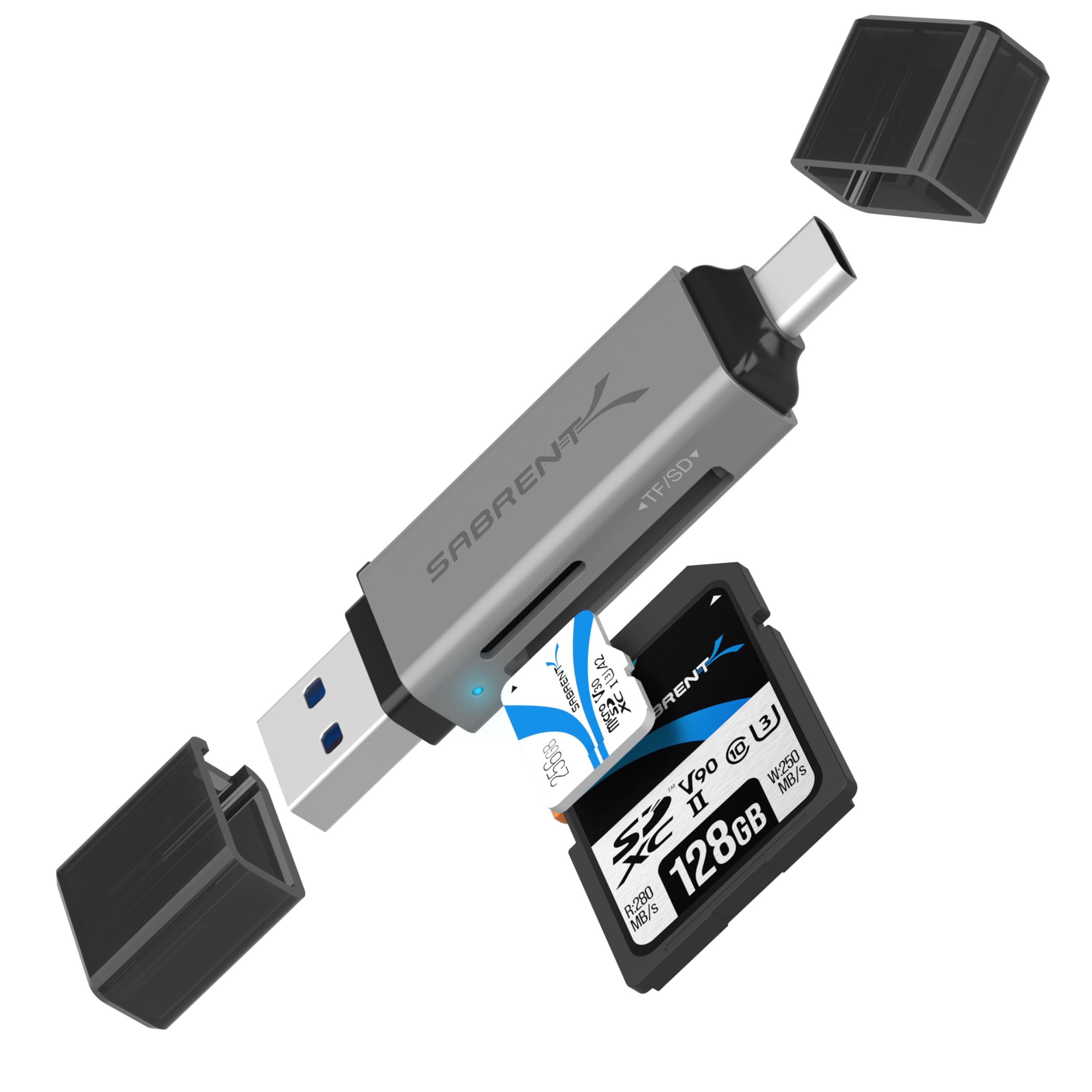
2,000+ ratings
Read Amazon ReviewsSABRENT USB-C & USB-A SD/Micro SD Card Reader
A compact dual-interface card reader for people moving SD and microSD files between USB-C or USB-A devices.
- Two host connector types: USB-C and USB-A, for use with supported laptops, PCs, and Android devices.
- Two card slots: one for SD cards and one for microSD cards.
- Supported card formats include SD, SDHC, SDXC, microSD, microSDHC, and microSDXC.
- USB 3.0 interface with a stated maximum transfer rate of up to 5Gbps; backward compatible with USB 2.0.

Pros
- Combines USB-C and USB-A connectors, reducing the need to carry separate readers for different port types.
- Handles both full-size SD and microSD cards across several common capacity-format families.
Consider before buying
- The up-to 5Gbps figure is an interface maximum, not a promise of a particular real-world transfer rate.
- Android support is limited to compatible devices, so check the phone or tablet’s support for external USB card readers before buying.
Read the full review summary
The CR-BCA2 pairs USB-C and USB-A connectivity with slots for full-size SD and microSD cards.
It supports SD, SDHC, SDXC, microSD, microSDHC, and microSDXC formats, and its USB 3.0 interface is rated for transfers up to 5Gbps when the connected host and card support the necessary speeds.
It also works with USB 2.0 hosts, where the interface will not deliver its maximum rate.
This design suits people who handle cards from cameras, dash cams, or other everyday devices and move files among laptops, PCs, and compatible Android devices. Plug-and-play operation across Windows, macOS, and compatible Android devices keeps setup simple.
Its compact build and LED activity indicator are useful portability touches, though buyers should check that their particular Android device supports this kind of card-reader connection.
The buying factors
SABRENT Card Reader Scorecard
Editorial scores reflect listed features and buyer fit; they are not laboratory measurements or customer ratings.
Connector flexibility
USB-C and USB-A support a broad mix of newer and traditional host ports in one reader.
Card format coverage
The stated support includes common SD and microSD families through SDXC and microSDXC.
Transfer potential
USB 3.0 is rated up to 5Gbps, though actual transfers also depend on the card and host.
Setup simplicity
Plug-and-play operation avoids a separate driver or software installation on supported systems.
Portability
Its lightweight, compact design is easy to carry, and an activity LED offers a useful status cue.
Android fit
Compatible Android devices are supported, but compatibility depends on the device.
Key Features and Specifications of SABRENT Card Reader
- Two host connector types: USB-C and USB-A, for use with supported laptops, PCs, and Android devices.
- Two card slots: one for SD cards and one for microSD cards.
- Supported card formats include SD, SDHC, SDXC, microSD, microSDHC, and microSDXC.
- USB 3.0 interface with a stated maximum transfer rate of up to 5Gbps; backward compatible with USB 2.0.
- Plug-and-play design that requires no separate drivers or software on Windows, macOS, and compatible Android devices.
- Compact, lightweight construction with a built-in LED activity indicator.
Pros and Cons of SABRENT Card Reader
Pros
- Combines USB-C and USB-A connectors, reducing the need to carry separate readers for different port types.
- Handles both full-size SD and microSD cards across several common capacity-format families.
- USB 3.0 offers higher transfer potential than a USB 2.0 connection when the card and host also support it.
- Driver-free setup and a compact build make it practical for occasional transfers on the go.
Consider before buying
- The up-to 5Gbps figure is an interface maximum, not a promise of a particular real-world transfer rate.
- Android support is limited to compatible devices, so check the phone or tablet’s support for external USB card readers before buying.
- If a computer only has USB 2.0, the connection cannot use the reader’s full USB 3.0 transfer potential.
Who Should Buy SABRENT Card Reader?
Good fit
Consider the CR-BCA2 if you regularly move photos, videos, or other files from SD and microSD cards and use a mix of USB-C and USB-A equipment.
Supporting both connector types in one compact reader is its strongest practical advantage, especially for people who switch between newer laptops and older PCs.
It also makes sense for straightforward transfers from cameras, dash cams, and everyday devices.
The supported card families cover widely used SD and microSD formats, while plug-and-play setup keeps the process simple on compatible Windows, macOS, and Android devices.
Before choosing it for a phone or tablet, confirm that the device supports connecting an external USB card reader.
For the best transfer potential, the host port and memory card should also support USB 3.0 speeds; the stated rate is an interface ceiling, not a guaranteed file-copy speed.
Who should skip it
Look elsewhere if your workflow depends on a specific Android phone or tablet and you have not confirmed that it supports external USB card readers.
This is a less compelling fit if all your transfers use a USB 2.0 host and you are buying primarily to take advantage of the USB 3.0 interface’s higher potential rate.
How the SABRENT Card Reader fits a mixed-device workflow
One reader for two host-port types
USB-C and USB-A connectors address a common compatibility problem when files move between newer and older computers.
The dual-interface design can reduce adapter juggling, though buyers should still check which connector their device accepts and how much clearance is available around its port.
SD and microSD coverage
Separate slots cover full-size SD and microSD cards, including their HC and XC families. That gives the reader a useful role across several everyday devices without requiring a different slot format for each card.
Confirm that your card falls within the listed formats before relying on it for a less common media type.
Transfer speed depends on the whole setup
USB 3.0 provides an interface rated up to 5Gbps, with USB 2.0 backward compatibility for older hosts.
The card’s own capabilities and the connected device also affect transfer time, so the maximum figure is best understood as headroom rather than a measured result for every file copy.
Simple setup with a portability focus
The plug-and-play approach avoids a separate driver installation on supported systems, while the compact, lightweight construction is convenient to carry. The built-in LED provides an activity cue during use.
For Android, compatibility remains device-dependent, so checking host support is a sensible step before purchase.
Alternatives to SABRENT Card Reader
USB charging alternative
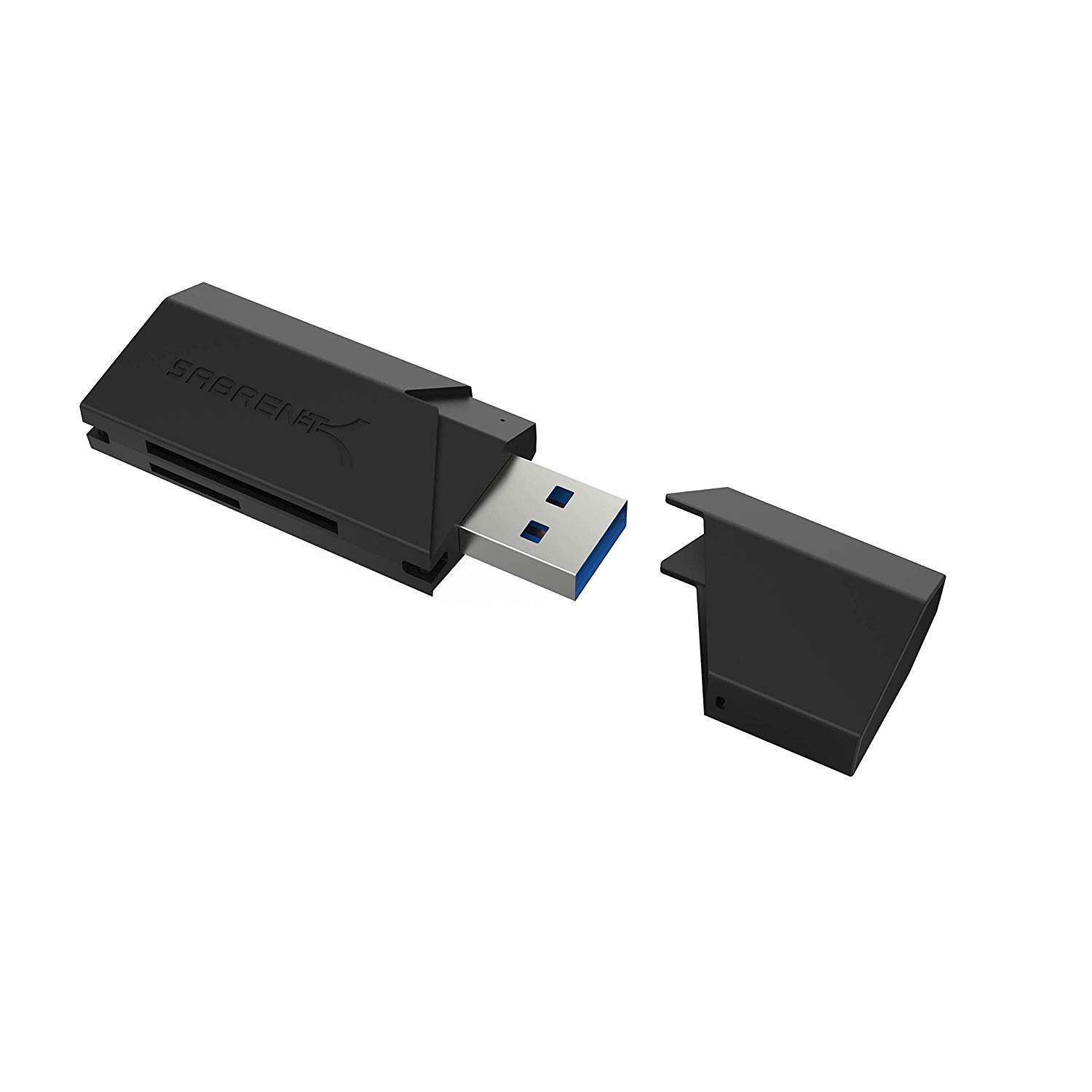
10,000+ ratings
Read Amazon ReviewsSABRENT SuperSpeed 2-Slot USB 3.0 Card Reader (CR-UMSS)
Choose the CR-BCA2 if having both USB-C and USB-A connectors is useful for your devices.
The CR-UMSS may suit a buyer whose computers use its USB connection and who values its listed MMC, T-Flash, or Linux support; check its connector compatibility against your particular setup before choosing.
- The CR-UMSS is a two-slot USB 3.0 reader with backward compatibility for USB 2.0.
- Its listed formats include SD, SDHC, SDXC, MMC, microSD, and T-Flash, and it is described as plug-and-play for Windows, Mac, Linux, and certain Android systems.
- It uses USB port power and does not need a separate power supply.
- The CR-BCA2 combines USB-C and USB-A connections with SD and microSD slots, and lists support for SD, SDHC, SDXC, microSD, microSDHC, and microSDXC.
Is SABRENT Card Reader Worth It?
The SABRENT USB-C & USB-A SD/Micro SD Card Reader is worth considering for routine transfers when you need SD and microSD support across devices with different USB port types.
Its broad listed card coverage, plug-and-play setup, and portable design make it a practical general-purpose reader.
Buy it if its connectors match your devices and, for Android use, confirm compatibility first. Treat the up-to 5Gbps figure as a maximum interface rate, with actual transfer speeds depending on the card and host.
Your review at a glance
2,000+ ratings
Read Amazon ReviewsSABRENT USB-C & USB-A SD/Micro SD Card Reader
A compact dual-interface card reader for people moving SD and microSD files between USB-C or USB-A devices.
- Two host connector types: USB-C and USB-A, for use with supported laptops, PCs, and Android devices.
- Two card slots: one for SD cards and one for microSD cards.
- Supported card formats include SD, SDHC, SDXC, microSD, microSDHC, and microSDXC.
- USB 3.0 interface with a stated maximum transfer rate of up to 5Gbps; backward compatible with USB 2.0.