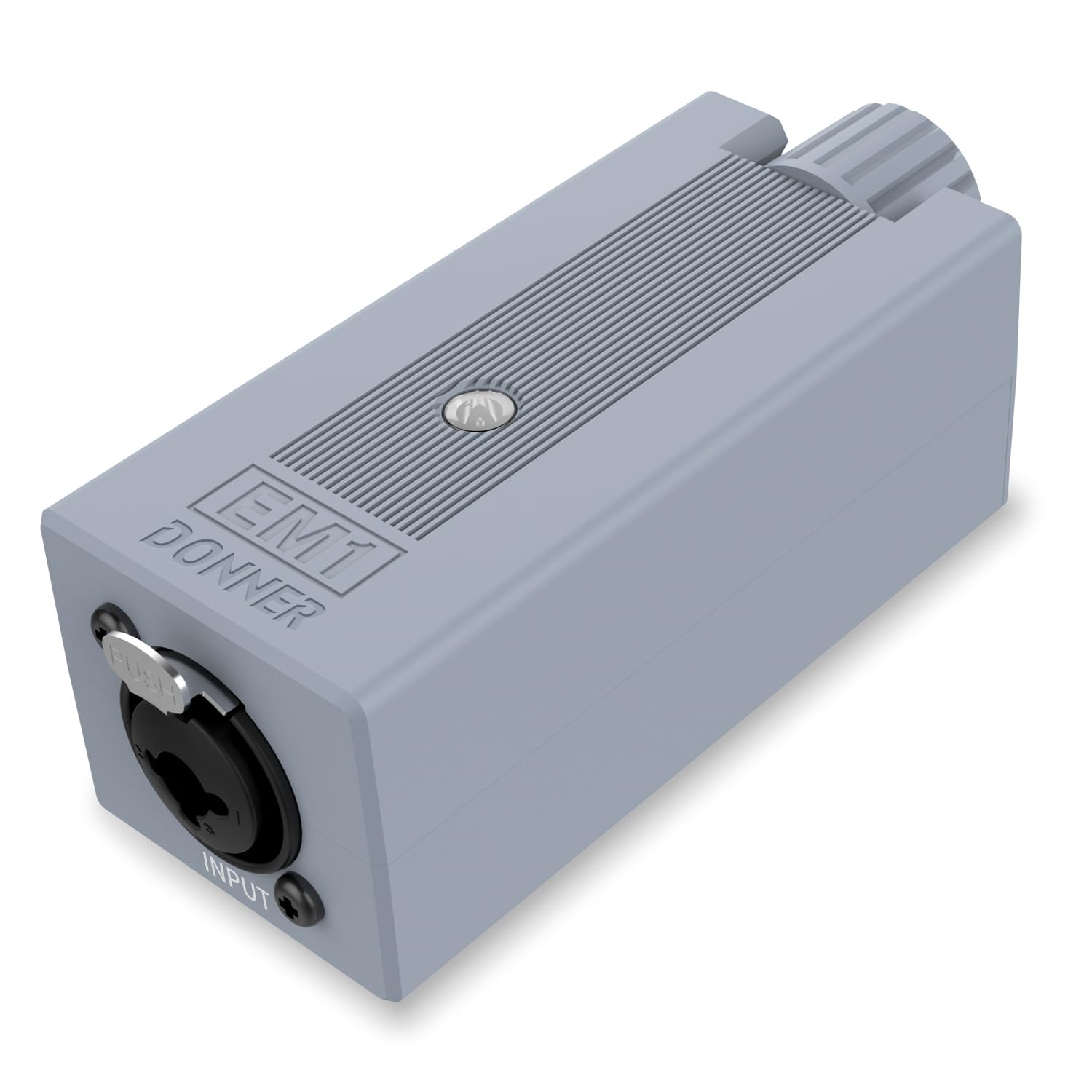
The Donner EM1 is a compact personal in-ear monitor amplifier for musicians who want a rechargeable headphone feed from an XLR or TRS source.
This Donner EM1 review looks at its input options, stereo and mono switching, and the practical limits to consider before adding it to a monitoring setup.
Donner EM1 Review Summary
The quick verdict
800+ ratings
Read Amazon ReviewsDonner EM1
A portable, rechargeable monitor amp for musicians who need a belt-pack headphone feed from XLR or TRS sources.
- XLR and TRS input connectors include a locking mechanism.
- A stereo/mono source switch supports different source and cable configurations.
- A 3.5 mm output connects to compatible headphones or earphones.
- High-power headphone amplification is intended to suit higher-impedance professional headphones.

Pros
- XLR and TRS inputs cover two common connection types for monitor feeds.
- Locking input connectors can help keep a connected cable secure during movement.
Consider before buying
- Microphones are not supported, so the EM1 cannot serve as a mic input or mic preamp.
- Its focused headphone-monitor role means buyers should confirm their source provides a compatible feed before relying on it.
Read the full review summary
The EM1 brings a useful set of stage-oriented basics into a small belt-pack format: XLR and TRS inputs with locking connectors, a stereo/mono source switch, a headphone output, volume control, and a rechargeable lithium-ion battery rated for up to 12 hours.
Its stated high-power design also makes it a candidate for professional headphones with higher impedance, where an ordinary output may not provide the level a player wants.
It is best suited to a performer who needs a personal headphone monitor fed from a compatible line or monitor source and values portability over a feature-rich mixer.
The EM1 does not support microphones, so it is not a standalone mic preamp or a complete monitoring system; check the source connection and whether mono or stereo operation matches your setup.
The buying factors
Donner EM1 Scorecard
Editorial scores reflect listed features and buyer fit; they are not laboratory measurements or customer ratings.
Stage-ready connectivity
XLR and TRS inputs with locking connectors suit common monitor-feed connections, with the source switch supporting stereo or mono use depending on the cable connection.
Portability
A compact design and metallic belt-pack clip make it easy to carry on a performer’s belt or in a gear bag.
Battery convenience
Rechargeable lithium-ion power and LED power and charging indicators are practical for mobile use; runtime is specified as up to 12 hours.
Headphone compatibility
The high-power design is intended to support higher-impedance professional headphones, a helpful focus for personal monitoring.
Setup flexibility
The input choices and mono/stereo switch offer useful flexibility, though operation still depends on choosing a compatible source and cable.
Scope of use
It serves a focused headphone-monitoring role. The stated lack of microphone support rules it out for buyers expecting a mic input.
Key Features and Specifications of Donner EM1
- XLR and TRS input connectors include a locking mechanism.
- A stereo/mono source switch supports different source and cable configurations.
- A 3.5 mm output connects to compatible headphones or earphones.
- High-power headphone amplification is intended to suit higher-impedance professional headphones.
- Rechargeable lithium-ion battery offers up to 12 hours of operation.
- LED indicators show power and battery charging status.
- A metallic belt-pack clip and compact design support portable use.
Pros and Cons of Donner EM1
Pros
- XLR and TRS inputs cover two common connection types for monitor feeds.
- Locking input connectors can help keep a connected cable secure during movement.
- Mono and stereo switching gives the user a way to match the incoming source and cable setup.
- Rechargeable operation and a belt-pack clip suit mobile monitoring.
- The high-power design addresses use with professional headphones that may need more drive.
Consider before buying
- Microphones are not supported, so the EM1 cannot serve as a mic input or mic preamp.
- Its focused headphone-monitor role means buyers should confirm their source provides a compatible feed before relying on it.
- Up to 12 hours is a maximum runtime; plan charging around the length and timing of sessions.
Who Should Buy Donner EM1?
Good fit
Consider the Donner EM1 if you need a compact personal monitor amplifier for rehearsals, live performance, or another setup where a headphone feed comes from an XLR or TRS source.
Its locking inputs, belt clip, and rechargeable design address practical needs for a performer who moves around rather than staying beside a fixed headphone output.
It also makes sense if your headphones are higher impedance and you want an amplifier designed with that use in mind.
Before buying, check the connector and signal path from your monitor source, confirm whether you need mono or stereo, and make sure your headphones use a compatible 3.5 mm connection.
Who should skip it
Skip it if you need to plug in a microphone, mix several sources, or use a device that functions as a complete monitoring console. The EM1’s documented role is headphone amplification, and microphones are not supported.
It may also be a poor fit if you need a fixed, mains-powered headphone station or your source does not provide a suitable XLR or TRS feed. Confirm the connection details of your existing equipment first.
What the Donner EM1 Means for Personal Monitoring
Inputs and signal setup
Having both XLR and TRS input connectors gives the EM1 flexibility for compatible monitor feeds. The locking mechanism is useful in a wearable setup, where cable movement can otherwise tug at a connection.
The stereo/mono switch should be set to match the source and cable configuration; check that routing before a performance so the feed is presented as intended.
Headphones and output
The EM1 is designed as a high-power headphone amplifier, including for higher-impedance professional headphones.
That focus makes it relevant to performers who need a personal listening level from a monitor feed, while the 3.5 mm output gives a defined connection point for suitable headphones or earphones.
Match your headphone plug and source arrangement to the unit before purchase.
Battery and belt-pack use
Rechargeable power reduces the need to stay beside a wall outlet, and the belt-pack clip supports use while moving on stage or during rehearsal.
The battery is rated for up to 12 hours, so the practical runtime depends on your session and usage. The LED power and charging indicators provide a simple way to check its state and plan recharging.
A focused tool, not a full rig
The EM1 is intentionally a personal headphone amp rather than a broad audio hub.
Since it does not support microphones, a performer who needs to bring a mic directly into the device should look for a different kind of equipment.
For the narrower task of converting a compatible monitor feed into a portable headphone connection, its features are more directly aligned.
Alternatives to Donner EM1
No alternative model is recommended here. Compare the design and features that matter to your routine before choosing another option.
Is Donner EM1 Worth It?
The Donner EM1 is worth considering if you want a portable, rechargeable personal headphone amp with XLR and TRS inputs, a mono/stereo switch, and a belt clip.
Its stated up-to-12-hour battery life and high-power headphone focus make it a practical candidate for mobile monitoring.
Buy it when your source provides a compatible monitor feed and you do not need microphone support or a complete mixer.
Check your cable routing and headphone connection first; those details determine whether this focused amp fits your rig.
Your review at a glance
800+ ratings
Read Amazon ReviewsDonner EM1
A portable, rechargeable monitor amp for musicians who need a belt-pack headphone feed from XLR or TRS sources.
- XLR and TRS input connectors include a locking mechanism.
- A stereo/mono source switch supports different source and cable configurations.
- A 3.5 mm output connects to compatible headphones or earphones.
- High-power headphone amplification is intended to suit higher-impedance professional headphones.